
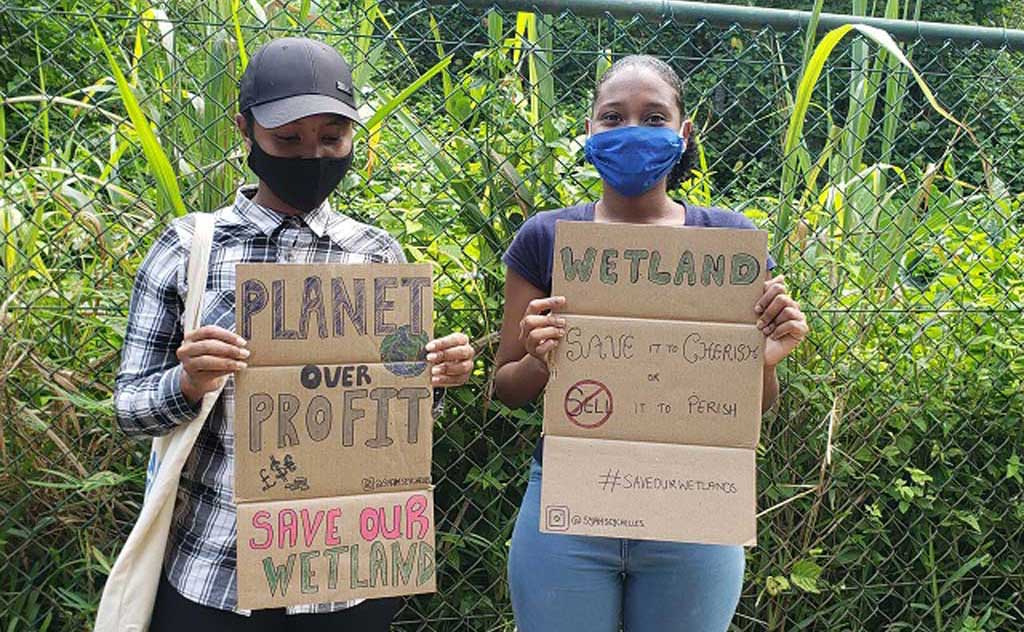
By Nirmal Jivan Shah
Why do debates over the environmental impact of development so often end in acrimony, despite the studies and public consultations? A proposed hotel beside a wetland can quickly become a dispute about motives, with conservationists accused of obstructing progress and developers of putting profit before everything else. Once each side expects the other to ignore inconvenient evidence, defending a fixed position can seem the safest course.
Economist Jeffrey Ely explores how such rigidity can arise in “Ruth, Anthony, and Clarence”. His model describes three voters who share the same interests but must pay to become informed. When two take fixed, opposing positions, their votes cancel out, leaving the third to investigate and decide. Neither of the first two then has an incentive to learn more. [1]
Ely’s model concerns voting, but offers an analogy for conservation disputes. The way decisions are organised may encourage people to hold their ground, especially where unequal power and conflicting interests make any concession feel like an advantage handed to an opponent.
Conservation conflicts often carry histories that a new assessment cannot erase. Steve Redpath and colleagues describe how exclusion, unequal bargaining power and past encounters shape disputes, while Francine Madden and Brian McQuinn explain why technical settlements can leave deeper conflicts over identity and relationships unresolved. The next proposal may then inherit the tensions of the last. [2,4]
More research does not necessarily settle disagreements over values and political choices. As Daniel Sarewitz argues, complex environmental questions can give opposing groups different bodies of credible evidence, allowing each to emphasise the findings that favour its position. An assessment might establish how much habitat a hotel would destroy, but it cannot decide whether that loss is acceptable or who should bear its consequences, so another study may simply postpone that judgement. [3]
In three Scottish conservation conflicts, Juliette Young and colleagues found that people’s sense of fairness was associated with greater trust and, through it, a sense that the conflict had been resolved. Many participants already knew the ecology well, suggesting that explaining more science would not address their main concerns. [5]
Across 305 environmental decisions in 22 Western democracies, Jens Newig and colleagues found that giving participants greater power was the participation feature most consistently associated with stronger environmental safeguards. Their analysis examined the safeguards written into decisions, rather than ecological recovery on the ground. [6]
For consultation to have that influence, it must begin while important choices are still open. Mark Reed’s review makes the case for early and continuing participation, supported by skilled facilitation and both local and scientific knowledge. [7] For a coastal hotel, this means discussing its location and scale while a smaller development, another site or refusal remains possible.
People also need a fair chance to examine the evidence. Giving a small NGO or community group a technical report only days before an environmental impact assessment hearing leaves little time to question its assumptions. Adequate review periods and access to independent expertise are essential if participation is to mean anything.
A conservation group may nevertheless have sound grounds for resisting successive projects that threaten irreplaceable habitat or rely on safeguards nobody can enforce. Communities may also be justified in opposing new proposals after earlier promises have been broken, and dismissing either group as inflexible does nothing to answer its concerns.
Public authorities deserve scrutiny too, particularly when they promote investment while assessing its environmental consequences. In Seychelles, the inquiry into the Assomption Island hotel project found improper executive pressure in the environmental approval process and recommended stronger protection for regulators’ independent judgement. [8] Trust depends on people knowing that those assessing a project can reach their own conclusions.
Participants should explain what evidence or design changes could alter their position, alongside the ecological limits and rights they regard as non-negotiable. Authorities, in turn, should show how submissions affected the decision and answer substantive objections. Before construction begins, they should establish who will monitor compliance and what will happen if the developer fails to meet its obligations.
For Seychelles, development that serves people and protects nature requires authorities willing to reject damaging proposals and insist on changes where a project can be improved. Until evidence can alter a project’s fate, there is little reason to expect the people around the table to abandon their familiar arguments.
References
1. Ely, J. C. (2026). Ruth, Anthony, and Clarence. Theoretical Economics, 21(3), 716–740. https://doi.org/10.3982/TE6224
2. Redpath, S. M., et al. (2013). Understanding and managing conservation conflicts. Trends in Ecology & Evolution, 28(2), 100–109. https://doi.org/10.1016/j.tree.2012.08.021
3. Sarewitz, D. (2004). How science makes environmental controversies worse. Environmental Science & Policy, 7(5), 385–403. https://doi.org/10.1016/j.envsci.2004.06.001
4. Madden, F., & McQuinn, B. (2014). Conservation’s blind spot: The case for conflict transformation in wildlife conservation. Biological Conservation, 178, 97–106. https://doi.org/10.1016/j.biocon.2014.07.015
5. Young, J. C., Searle, K., Butler, A., Simmons, P., Watt, A. D., & Jordan, A. (2016). The role of trust in the resolution of conservation conflicts. Biological Conservation, 195, 196–202. https://doi.org/10.1016/j.biocon.2015.12.030
6. Newig, J., Jager, N. W., Challies, E., & Kochskämper, E. (2023). Does stakeholder participation improve environmental governance? Evidence from a meta-analysis of 305 case studies. Global Environmental Change, 82, 102705. https://doi.org/10.1016/j.gloenvcha.2023.102705
7. Reed, M. S. (2008). Stakeholder participation for environmental management: A literature review. Biological Conservation, 141(10), 2417–2431. https://doi.org/10.1016/j.biocon.2008.07.014
8. Commission of Inquiry into the Lease and Development of Assomption Island. (2026). Final Report, 27 June 2026. Chapter II, para. 2.187; Chapter X, para. 10.41. Read the report
(Banner image: Protest against wetland devastation to build a hotel on Mahe, Seychelles Wikimedia - Creative Commons Attribution 4.0)
